10 Best MS Pipe Making Machine Manufacturers in 2026?
Choosing reliable Ms Pipe Making Machine Manufacturers in 2026 requires more than comparing advertised production speeds. A machine may promise 120 meters per minute, yet struggle with thin-wall steel, frequent size changes, or inconsistent weld quality. Buyers should examine forming accuracy, high-frequency welding stability, cutting tolerance, mill structure, and control-system support. These details matter on a real factory floor, where vibration, dust, operator skill, and raw-material variation can affect every pipe.
This guide reviews ten manufacturers through a practical, evidence-based lens. The comparison considers product range, engineering experience, customization, commissioning support, spare-parts availability, safety features, and after-sales responsiveness. Technical catalogs and polished websites are useful, but they do not tell the whole story. Installation records, customer feedback, sample production, and transparent testing procedures deserve equal attention. A strong supplier should explain its design choices clearly and provide measurable performance data.
No shortlist is perfect. Some manufacturers excel in large-diameter mills but offer limited flexibility for smaller profiles. Others provide advanced automation but need stronger local service coverage. That trade-off deserves careful thought. The selected companies represent different strengths, price positions, and production capabilities. Readers can use this overview as a starting point, then verify certifications, factory capacity, delivery schedules, and references before making a purchase decision. The best choice is not always the most famous name. It is the manufacturer that fits the buyer’s steel grades, output targets, workforce, budget, and long-term maintenance plan.
What Is an MS Pipe Making Machine?
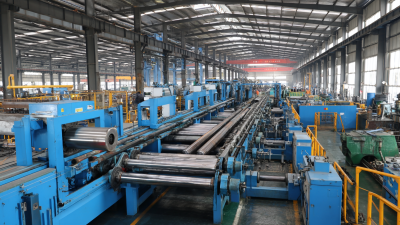
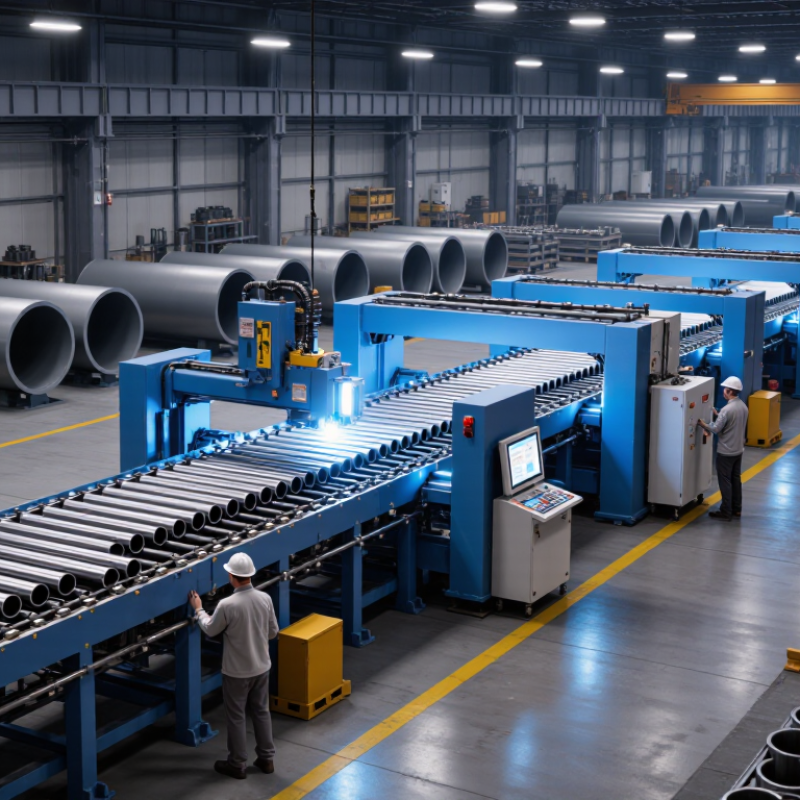
An MS pipe making machine is an industrial production line designed to manufacture mild steel pipes from flat steel strips. “MS” means mild steel, a low-carbon material valued for its weldability, affordability, and practical strength. The machine changes a coiled strip into a round, square, or rectangular pipe through several controlled stages.
The process usually begins with uncoiling and leveling the steel strip. Forming rolls then bend it gradually into the required shape. An electric resistance welding unit joins the edges along the pipe seam. Sizing rolls improve dimensional accuracy, while a cutting unit separates pipes into fixed lengths. Some lines also include end facing, straightening, and automatic bundling equipment.
Small details affect the result. Strip thickness, steel grade, roll alignment, welding current, and line speed must match carefully. Poor alignment can create uneven seams or slightly twisted pipes. That happens more often than brochures suggest. Operators should inspect weld appearance, outer dimensions, wall thickness, and cut length during production. In my experience, a stable cooling system and regular roll maintenance prevent many avoidable defects. However, no machine removes the need for trained adjustment. Production data can reveal problems, but practical judgment still matters. A reliable setup should also include guards, emergency stops, documented maintenance, and inspection records. It is equipment, not magic.
10 Best MS Pipe Making Machine Manufacturers in 2026? - What Is an MS Pipe Making Machine?
| Profile |
Machine Configuration |
Pipe Outside Diameter |
Wall Thickness |
Typical Line Speed |
Forming and Welding Method |
Main Product Applications |
Automation Features |
Typical Changeover Time |
Relevant Product Standards |
| 01 |
Small-diameter ERW line |
10–32 mm |
0.5–2.0 mm |
30–120 m/min |
Roll forming with high-frequency resistance welding |
Furniture tube, light structural tube, conduits |
PLC, HMI, automatic length control and flying cut-off |
30–90 minutes |
ASTM A513, EN 10305 |
| 02 |
Light and medium ERW line |
20–63.5 mm |
0.8–3.0 mm |
30–100 m/min |
Multi-stand roll forming with HF welding |
Water lines, scaffolding, general fabrication |
Automatic speed synchronization and weld-seam monitoring |
45–120 minutes |
ASTM A53, ASTM A513 |
| 03 |
General-purpose MS pipe line |
20–76 mm |
0.8–3.5 mm |
25–90 m/min |
Cold roll forming with high-frequency welding |
Construction tube, handrails, automotive components |
PLC recipe storage, automatic gauge adjustment and fault alarms |
45–120 minutes |
EN 10219, ASTM A500 |
| 04 |
Medium-diameter structural ERW line |
20–114 mm |
1.0–4.0 mm |
20–80 m/min |
Breakdown forming, fin-pass forming and HF welding |
Structural supports, greenhouse frames, mechanical tubing |
Closed-loop line control, automatic tracking and digital diagnostics |
60–150 minutes |
ASTM A500, EN 10219 |
| 05 |
Heavy-wall ERW line |
60–168 mm |
2.0–6.0 mm |
15–60 m/min |
Heavy-duty roll forming with HF welding and sizing |
Industrial piping, piling components, heavy fabrication |
Automatic edge control, weld monitoring and hydraulic adjustment |
90–180 minutes |
ASTM A53, API 5L |
| 06 |
Large-diameter ERW line |
89–219 mm |
3.0–8.0 mm |
10–45 m/min |
High-load forming with HF welding and online sizing |
Transmission supports, utility piping, structural columns |
Automatic forming control, ultrasonic inspection integration and data logging |
120–240 minutes |
API 5L, ASTM A53 |
| 07 |
Spiral-welded MS pipe line |
219–508 mm |
3.0–12.0 mm |
2–20 m/min |
Helical forming with submerged arc welding |
Water transmission, piling, low-pressure fluid transport |
Automatic strip alignment, welding parameter control and seam tracking |
60–180 minutes |
API 5L, ASTM A252 |
| 08 |
Round-to-square and rectangular tube line |
15–100 mm equivalent |
0.8–4.0 mm |
20–80 m/min |
ERW round forming followed by direct square forming or sizing |
Furniture, racking, construction frames and machinery |
Quick-change tooling, servo sizing and automatic length cutting |
60–180 minutes |
ASTM A500, EN 10219 |
| 09 |
Precision MS tube line |
8–63.5 mm |
0.5–2.5 mm |
40–120 m/min |
Precision roll forming, HF welding and sizing calibration |
Automotive parts, heat-exchanger components and precision fabrication |
Laser or optical measurement, automatic tension control and SPC data output |
45–120 minutes |
EN 10305, ASTM A513 |
| 10 |
Integrated pipe production line with finishing |
20–168 mm |
0.8–6.0 mm |
15–90 m/min |
ERW forming with sizing, cutting, end facing and bundling |
High-volume construction, mechanical and fluid-service tube |
Centralized PLC, MES-ready data collection, automatic bundling and line alarms |
90–240 minutes |
ASTM A53, ASTM A500, EN 10219 |
Note: MS pipe means mild-steel pipe. The figures shown are industry-typical engineering ranges for comparable machine configurations; actual capacity depends on steel grade, coil width, forming design, welding power, pipe specification and required inspection level.
Key Features to Compare Among MS Pipe Machine Manufacturers
When comparing MS pipe making machine manufacturers in 2026, examine the machine’s working range first. A reliable line should handle your target strip width, thickness, and pipe diameter without constant tooling changes. Ask for documented production data, not only catalogue speed. A fast line can still create uneven seams, poor roundness, or excessive scrap.
Inspect the forming section closely. Strong roller stands, stable guides, and accurate sizing tools help maintain consistent dimensions. High-frequency welding equipment should provide steady power and controlled heat. Check weld monitoring, impeder design, cooling performance, and automatic fault detection.
These details matter when producing pipes for construction, furniture, or fluid applications. Request sample pipes from similar steel grades. Touch the seam. Measure the wall thickness.
Cutting accuracy also deserves attention. Flying saws should produce clean ends without damaging the pipe surface. A dependable control system can record speed, temperature, weld power, and downtime. This makes quality checks easier and supports traceability.
However, automation is not a substitute for skilled operators. I have seen impressive systems perform poorly after careless setup. Compare changeover time, spare-part availability, training, and local technical support. Energy consumption and maintenance access should be evaluated during a factory visit, where noise, vibration, and actual production discipline become visible.
Top 10 MS Pipe Making Machine Manufacturers in 2026
Top 10 MS Pipe Making Machine Manufacturers in 2026
The top ten MS pipe making machine manufacturers in 2026 should be judged by engineering depth, not advertising volume. Buyers need stable forming, welding, sizing, and cutting performance. World Steel Association reported about 1.88 billion tonnes of crude steel production in 2024. This huge output supports continued demand for efficient pipe production lines. Industry forecasts also expect the global steel pipe market to grow steadily through the decade, although estimates differ by region and product category.
A reliable manufacturer should provide machine speeds, tube diameter ranges, weld quality data, and tested energy consumption. The best suppliers usually offer automatic coil loading, edge milling, high-frequency welding, online inspection, and servo-controlled cutting. Factory acceptance testing matters. Ask for sample pipes, production records, and references from facilities using similar steel grades. A polished brochure is not proof. Even experienced buyers can overlook maintenance access and spare-part availability.
Tips: Compare total operating cost, not only purchase price. Check whether operators can change sizes without lengthy downtime. Request documented tolerances for wall thickness, ovality, and weld alignment. Reports from industrial research firms often show that automation improves productivity, but the result depends on material quality and operator training. That point is easy to miss. A lower-cost line may appear attractive, yet unstable strip feeding can create scrap, rework, and hidden delays. The strongest 2026 manufacturers will combine practical installation support, measurable process control, and honest technical limits.
How to Evaluate Machine Quality, Capacity, and Production Efficiency
10 Best MS Pipe Making Machine Manufacturers in 2026?
Selecting an MS pipe making machine requires more than comparing brochures. The World Steel Association reported 1,888.2 million tonnes of crude steel production in 2023, showing the scale of competition and demand. Buyers should inspect weld stability, forming accuracy, and surface protection under real production conditions. Ask for sample pipes, not only catalog photographs.
Machine quality begins with measurable results. Check outside-diameter tolerance, wall-thickness consistency, straightness, and weld penetration across several coil grades. A practical factory test should record rejected pipes, changeover time, and continuous operating speed. Nominal speed is not production capacity. A line rated at 80 metres per minute may deliver 62 after setup losses and inspection stops.
Look at efficiency too. The International Energy Agency identifies industry as using about 37% of global final energy, so motor efficiency and heating control deserve careful review. Request energy consumption per tonne, compressed-air demand, and a complete maintenance schedule. Overall equipment effectiveness is useful, but operators must verify the calculation. A spreadsheet can still lie. I would also examine spare-part availability, remote diagnostics, and training records. These details often reveal whether the manufacturer has practical experience. However, no machine is perfect. Even a strong acceptance test may miss problems caused by poor strip quality, incorrect tooling, or rushed installation. A small pilot run is worth the extra time.
How to Choose the Right MS Pipe Machine Manufacturer
Choosing the right MS pipe machine manufacturer starts with your production facts, not a glossy brochure. The World Steel Association reported global crude steel production of about 1.89 billion tonnes in 2023, showing the scale of competition and demand. Your target market still matters more. Define pipe diameter, wall thickness, steel grade, monthly output, and acceptable rejection rates. A machine for 20 mm irrigation tubes cannot efficiently produce 300 mm structural pipes.
Ask the manufacturer for trial-production records, weld-quality data, dimensional tolerances, and references from similar factories. Check forming accuracy, high-frequency welding stability, cutting precision, automation, spare-part availability, and operator training. Request energy consumption per tonne, not only motor power. The International Energy Agency continues to identify heavy industry as a major energy user, so inefficient equipment can quietly damage margins. Measure twice. A low purchase price may hide expensive tooling changes and long maintenance delays.
Tips:
Compare three technical proposals using the same specification sheet. Confirm whether quoted speed includes setup, coil changes, and inspection time. Review factory acceptance testing and after-sales response times in writing. Certification helps, but it is not proof of performance; an ISO 9001 certificate alone cannot guarantee consistent pipes. Ask for recent test reports aligned with your required standards, such as ASTM or equivalent national specifications. I would also leave budget for unexpected tooling wear. That part is often underestimated.