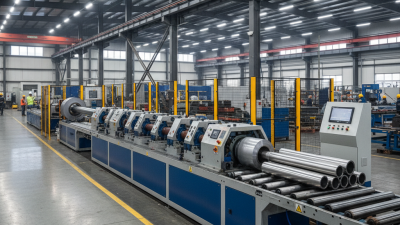
Choosing a Pipe Welding Machine Tube Mill Production Line is a strategic decision for manufacturers seeking stable quality, higher output, and better control. A modern line can transform steel strip into precise welded pipes through forming, welding, sizing, cutting, and inspection. Each stage matters. A small alignment error may create visible ovality, uneven seams, or unnecessary material waste.
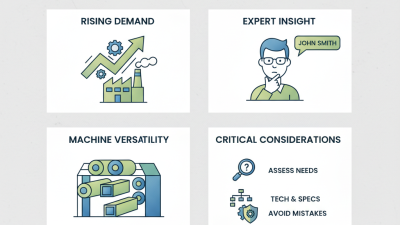
Professor John C. Lippold, a respected welding-metallurgy specialist, emphasizes, “Weldability depends on the material, the process, and the service conditions.” This principle applies directly to tube mill production. The correct welding method must match the steel grade, wall thickness, pipe diameter, and expected application. Experienced operators also examine heat input, electrode condition, cooling performance, and weld-seam stability. These details are easy to overlook.
Real production is rarely perfect.
A well-designed Pipe Welding Machine Tube Mill Production Line can reduce manual handling and support repeatable dimensions. It may also improve energy use when motors, controls, and welding systems are properly coordinated. However, automation alone cannot solve poor maintenance or unsuitable raw material. That assumption deserves reflection. Buyers should evaluate line speed, changeover time, spare-part access, technical support, and inspection capability before comparing prices. A low initial cost may become expensive when downtime interrupts delivery schedules.
This article examines why manufacturers choose this production system, how its main components work, and which practical factors influence long-term performance. The focus remains on measurable value: reliable welds, consistent pipe geometry, safer operation, and sustainable productivity. The best decision is not always the fastest machine. It is the line that fits the factory’s materials, workforce, orders, and quality objectives.
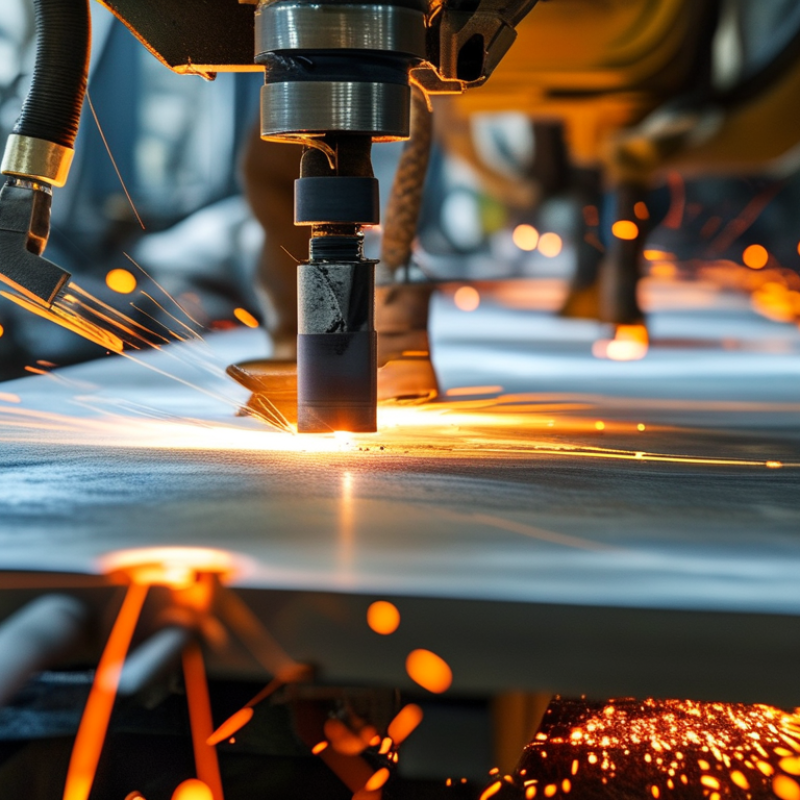
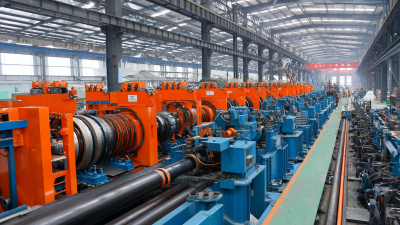
A pipe welding machine tube mill production line converts steel strip into continuous welded tubes. The process usually includes uncoiling, leveling, strip forming, high-frequency welding, sizing, cutting, and inspection. Each stage has a defined role. The forming section gradually bends flat strip, while the welding unit joins its edges under controlled heat. A flying saw then cuts the tube into fixed lengths without stopping production.
The equipment matters because process stability affects wall thickness, weld quality, and dimensional accuracy. The World Steel Association reported global crude steel production of about 1.89 billion tonnes in 2023. A large downstream market still depends on efficient tube processing. Industry studies from Grand View Research also identify construction, automotive components, and infrastructure as major welded-tube demand areas. These sectors require repeatable output, not only high speed.
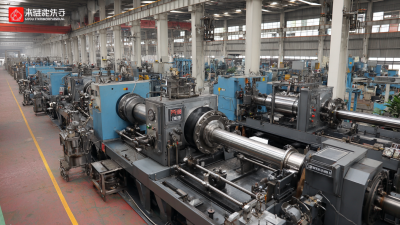
In practical operation, technicians monitor strip tension, weld temperature, roll alignment, and cooling water. A small alignment error can create visible seam defects. It can also increase scrap. Inline eddy-current or ultrasonic testing adds another control layer, although no inspection system removes every risk. This is where production experience matters. A line may promise impressive output, but actual performance depends on steel grade, tube diameter, maintenance, and operator skill. The International Organization for Standardization continues to emphasize documented quality control for welded steel products. Some production plans still underestimate setup time. That deserves closer review.

A pipe welding machine tube mill production line turns coiled steel into accurately sized pipe through a continuous sequence. The process begins with decoiling, leveling, and strip-end preparation. The strip then enters forming stands, where shaped rolls gradually create an open tube. High-frequency electrical energy heats the edges, and pressure rolls forge them into a longitudinal weld. The line removes excess bead, calibrates the diameter, and cuts each pipe to length.
This sequence demands stable settings, not only powerful equipment. Welding frequency, line speed, edge alignment, and cooling conditions must work together. According to the World Steel Association’s World Steel in Figures 2024, global crude steel production reached about 1.89 billion tonnes in 2023. ISO 3183 also emphasizes controlled manufacturing and inspection for line pipe applications. On the shop floor, however, perfect settings are rare. A small burr or uneven strip edge can quickly disturb weld quality. Operators should inspect the weld visually and verify dimensions with calibrated gauges.
Tips: Keep the forming rolls clean and aligned. Record welding temperature, speed, and current during every shift. Use ultrasonic or eddy-current testing when the application requires stronger assurance. Do not trust one inspection method alone. A missed calibration can become expensive rework.
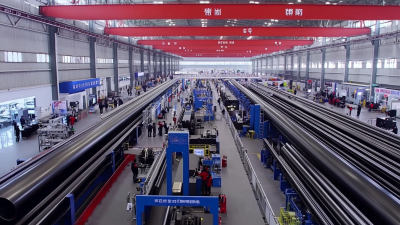
A pipe welding machine tube mill production line combines forming, welding, sizing, cutting, and inspection in one controlled workflow. This arrangement reduces repeated handling between separate machines. It also helps maintain stable dimensions, especially when producing long steel tubes for construction, furniture, and fluid transport.
The scale of demand is significant. World Steel Association’s World Steel in Figures 2025 reports approximately 1.88 billion tonnes of crude steel production in 2024. Converting part of that material into accurately welded tubes requires repeatable processing. Automatic welding control can stabilize seam quality, while inline sizing reduces diameter variation. That matters when tubes must fit couplings, frames, or downstream bending equipment.
Production efficiency is another advantage. One integrated line can reduce floor movement, shorten setup time, and support faster product changes with suitable tooling. The U.S. Department of Energy identifies steel processing as an energy-intensive industrial activity, so reducing unnecessary handling may also support better resource control. However, higher speed is not always better. Poor strip alignment can create burrs, weak seams, or frequent stoppages. The trade-off is real. Skilled operators still need to monitor weld temperature, roll pressure, and cutting accuracy. A well-designed tube mill improves consistency, but it does not replace judgment.
A pipe welding machine tube mill production line can process several metals and pipe profiles when its forming, welding, and sizing sections are correctly configured. Carbon steel is widely used for structural tubes, furniture frames, transport equipment, and general fluid service. Stainless steel suits hygienic equipment, decorative applications, and environments exposed to moisture. Galvanized or coated strip may also be processed, but surface condition requires careful control.
The line can produce round, square, rectangular, and special-shaped tubes. Round pipes often support water, air, and mechanical applications. Square and rectangular sections provide efficient strength in frames and construction components. Material thickness, strip width, steel grade, and weldability determine the practical production range. High-frequency welding works well with many carbon and stainless steel grades, yet poor edge preparation can create weak seams. Real production is less simple than a specification sheet suggests.
Tips: Confirm the material certificate before production. Check yield strength, thickness tolerance, and surface coating. Match the welding system to the steel chemistry. Use stable forming pressure to prevent corner cracks in square tubes. Inspect welds with suitable testing equipment, not only visual checks. A wider material range is not always better; frequent setup changes can reduce consistency. Operators should record speed, temperature, and sizing adjustments, because small differences often affect tube straightness and seam quality.
| Material Group | Typical Steel or Alloy | Common Thickness Range | Typical Pipe Types | Suitable Welding Process | Main Applications | Production Considerations |
|---|---|---|---|---|---|---|
| Carbon Steel | Low-carbon structural and commercial steel | Approximately 0.8–8 mm, depending on the mill design | Round, square, rectangular, and special-shaped welded tubes | High-frequency welding (HFW) or electric resistance welding (ERW) | Construction frames, furniture, machinery, guardrails, and general fabrication | The most widely used material; tooling, forming rolls, and welding power must match the selected diameter and thickness. |
| Galvanized Steel | Zinc-coated carbon steel strip | Approximately 0.8–4 mm for many tube mill configurations | Round conduit, fencing tube, greenhouse tube, and light structural tube | ERW or HFW, with controlled welding parameters | Outdoor structures, electrical conduit, agricultural systems, and water-related installations | Zinc coating can affect weld stability and electrode or impeder life; the weld area may require cleaning, cooling, and zinc repair. |
| Stainless Steel | Austenitic stainless steel, such as common 300-series grades | Approximately 0.5–4 mm, depending on the product range | Sanitary tube, decorative tube, heat-exchanger tube, and process piping | High-frequency welding, TIG welding, or laser welding, according to the required quality level | Food processing, chemical equipment, architectural products, and household equipment | Requires stainless-compatible tooling, careful surface protection, accurate edge alignment, and controlled heat input. |
| HSLA Steel | High-strength low-alloy steel | Approximately 1.5–6 mm for compatible welded tube lines | Structural round tube, square tube, rectangular tube, and automotive components | HFW or ERW with accurately controlled welding energy | Heavy equipment, transport structures, storage systems, and load-bearing assemblies | Higher strength does not automatically mean higher weldability; forming reduction, edge preparation, and heat input must be validated. |
| Aluminum Alloys | Wrought aluminum tube-forming alloys | Approximately 0.8–5 mm on specially configured lines | Lightweight round, square, rectangular, and profile tubes | High-frequency, TIG, laser, or other process selected for the alloy and wall thickness | Transportation, heat-transfer equipment, lightweight structures, and architectural systems | Aluminum generally requires dedicated tooling and process settings because of its low density, high thermal conductivity, and softer surface. |
| Copper and Copper Alloys | Copper-based strip materials | Commonly below 3 mm on dedicated or specially adapted equipment | Thin-wall round tube, heat-transfer tube, and electrical tube | TIG, laser, or other welding methods selected for high electrical and thermal conductivity | Refrigeration, air-conditioning, electrical, and heat-exchange systems | Copper is not normally processed on a standard carbon-steel tube mill without changes to welding power, tooling, cooling, and quality control. |
| Round Pipe | Carbon steel, galvanized steel, stainless steel, or other compatible strip | Determined by the selected diameter-to-thickness range | Conduit, water pipe, mechanical tube, structural pipe, and line pipe | ERW, HFW, TIG, or laser welding | Fluid transport, construction, machinery, and general industrial use | Round tubes are commonly produced at high speed and can be supplied with sizing, cutting, end finishing, and testing equipment. |
| Square and Rectangular Tube | Mostly carbon steel, HSLA steel, galvanized steel, or stainless steel | Approximately 1–8 mm, depending on section size and equipment capacity | Hollow structural sections, furniture tube, racking tube, and machine frames | ERW or HFW after forming from a welded round or directly formed section | Buildings, furniture, storage racks, agricultural equipment, and transport structures | A multi-purpose line may need interchangeable forming and sizing rolls to switch efficiently between round, square, and rectangular products. |
| Spiral-Welded Pipe | Carbon steel or low-alloy steel strip | Often produced in heavier gauges than small-diameter tube mill products | Large-diameter water, piling, structural, and low-pressure transport pipe | Submerged arc welding or other process selected for large-diameter pipe | Water infrastructure, piling, structural work, and selected pipeline applications | Spiral-welded pipe generally requires a dedicated spiral pipe machine rather than a conventional longitudinal ERW tube mill. |
Selecting a pipe welding machine tube mill production line starts with the product, not the advertised speed. Define pipe diameter, wall thickness, steel grade, and monthly output. Confirm that the forming, welding, sizing, and cutting sections match these requirements. A line designed for thin tube may struggle with heavier strip. That mistake is expensive.
Ask for verified production data and sample weld results. Check strip-width tolerance, weld stability, dimensional accuracy, and changeover time. Operators should reach controls safely and inspect the weld area without awkward access. A reliable supplier should provide installation guidance, training, maintenance records, and measurable acceptance standards. My early assumption was wrong. Higher speed did not always produce better value.
Maintenance begins with clean habits. Remove steel dust from rollers, guides, and electrical cabinets each shift. Inspect electrode condition, coolant flow, bearings, and lubrication points on a fixed schedule. Check roller alignment after tool changes. Even a small offset can create uneven edges or unstable welding. Record vibration, temperature, downtime, and rejected pipes. These details reveal gradual faults before they stop production. Calibrate measuring devices regularly, and inspect sample pipes at the start of every batch. Do not ignore unusual sounds. They often appear before visible damage. Yet maintenance plans can be too ambitious. A shorter checklist, completed consistently, may work better than a perfect schedule nobody follows.