Why Choose a Tube Mill Production Line?
Choosing a Tube Mill Production Line is a decision about consistency, not machinery alone. A well-designed line can transform steel strip into accurate tubes with controlled dimensions, clean welds, and repeatable output. It brings forming, welding, sizing, cutting, and inspection into one connected process. This reduces unnecessary handling between production stages.
Dr. S. K. Banerjee, a respected steel-processing specialist, once observed, “Reliable tube production depends on control at every stage, not speed at one stage.” This principle remains practical on the factory floor. Operators watch the strip entering the forming section. They check roll alignment, welding temperature, cooling flow, and cut length. Small errors can become visible as uneven seams, oval tubes, or excessive scrap.
The right line can also support different tube sizes and material grades. Quick-change tooling may shorten downtime. Automated monitoring can identify drift before it becomes a costly batch problem. Energy-efficient motors and controlled welding systems may lower operating costs over time.
But automation is not a complete answer. Poor maintenance can damage even advanced equipment. An impressive output figure may also hide unstable quality. That deserves honest reflection.
A strong Tube Mill Production Line should match production volume, product specifications, available floor space, and operator capability. It should allow practical maintenance, not create a maze of inaccessible components. When these factors align, the line becomes more than a production asset. It becomes a dependable foundation for quality, efficiency, and long-term manufacturing growth.
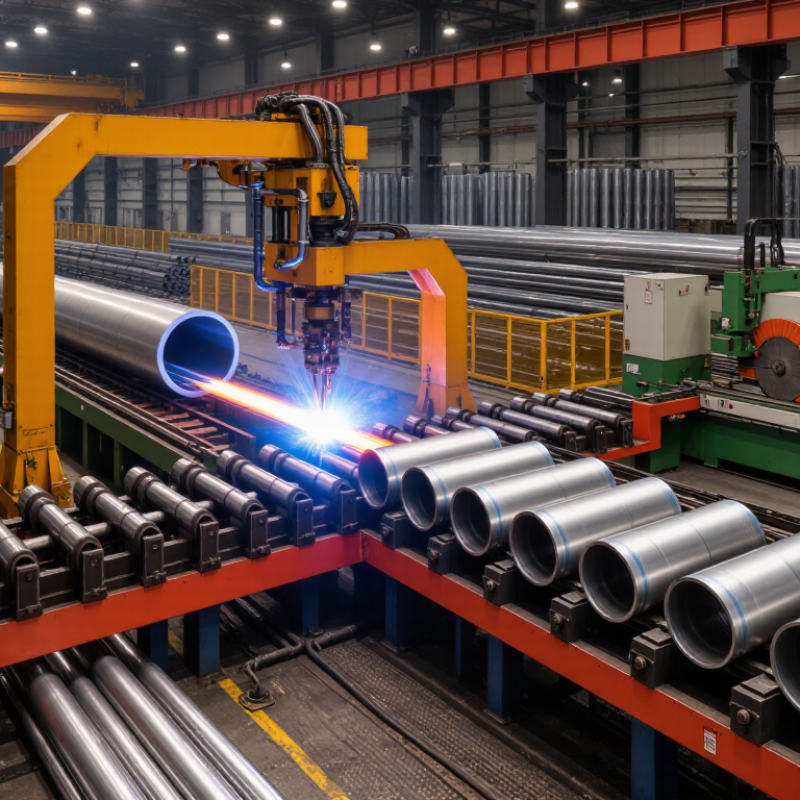
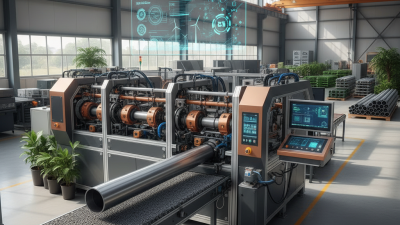
A tube mill production line is an integrated system that transforms flat steel strip into welded tubes through continuous forming and sizing. The strip enters an uncoiler, passes through leveling and forming stands, and then reaches a welding unit. Roll tooling gradually bends the edges together. High-frequency welding heats the seam, while squeeze rolls consolidate it. A cutting machine produces fixed lengths. Some lines also include end facing, straightening, testing, and bundling equipment. This arrangement supports repeatable output and reduces manual handling. Yet automatic operation does not mean maintenance-free. Misaligned rolls can create uneven seams and visible surface marks.
Choosing a suitable line depends on tube diameter, wall thickness, steel grade, production speed, and available floor space. Thin strip requires careful tension control and stable welding energy. Heavier material needs stronger stands and greater drive torque. Operators usually monitor weld temperature, strip tracking, coolant flow, and cutting accuracy. Non-destructive testing can identify seam flaws before shipment. A line may look impressive during a factory trial, but long-term stability matters more. I would question any specification that lists speed without material conditions.
Tips: Ask for sample tubes, dimensional reports, and a clear tooling-change procedure. Check guarding, emergency stops, electrical documents, and spare-part access. Leave room for inspection. It is often forgotten.
A tube mill production line continuously forms steel strip into a round, square, or rectangular tube, welds the seam using high-frequency technology, sizes the profile, and cuts it to length. Continuous processing supports high output, consistent dimensions, and efficient material handling.
The chart shows representative operating-speed ranges commonly specified for high-frequency welded carbon-steel tube mills. Actual speed depends on tube diameter, wall thickness, steel grade, weld quality requirements, tooling, and finishing operations.
A tube mill production line converts flat steel strip into precise, continuous tube. World Steel Association data reports 1,888.2 million tonnes of crude steel production in 2023. That scale increases the need for efficient downstream processing.
The process starts with an uncoiler, which feeds a steel coil into the forming section. Guide rolls keep the strip centered. Several forming stands gradually bend it into a round or square shape. The change happens step by step.
An electric resistance welding unit then joins the edges. It uses controlled heat and pressure, without adding filler metal. Scrapers remove the external weld bead. Sizing rolls correct the final diameter and improve straightness. A flying saw cuts the tube into programmed lengths while production continues.
Sensors monitor strip speed, weld current, temperature, and line tension. These measurements help operators detect drift before defects spread. The process is fast, but not flawless. Poor coil alignment can create uneven walls. Excessive welding heat may weaken the seam.
The International Organization for Standardization specifies dimensional and quality requirements through standards such as ISO 3183 for line pipe. In practice, manufacturers still need sampling, visual checks, and non-destructive testing. A tube that looks smooth may hide a small weld discontinuity. That is why reliable inspection remains essential.
Why Choose a Tube Mill Production Line? Which Materials and Tube Types Can It Process?
A tube mill production line forms metal strip into welded tubes through controlled shaping and high-frequency welding. It commonly processes carbon steel, galvanized steel, stainless steel, and selected aluminum grades. The World Steel Association reported 1,888 million tonnes of crude steel production in 2023. That supply supports many tube applications, from construction frames to automotive components.
Material choice still depends on the mill’s design. Carbon steel suits round, square, and rectangular structural tubes. Galvanized strip helps resist corrosion in fencing, shelving, and light construction. Stainless steel supports hygienic equipment, decorative tubing, and chemical-service applications. The International Stainless Steel Forum reported global stainless production of about 58.4 million tonnes in 2023. Aluminum can reduce weight, but it needs careful welding control and suitable tooling. Not every line handles it reliably. Strip thickness, yield strength, coil width, and weldability must match the forming and welding system. A small mismatch can create visible seams or unstable dimensions.
Tips: Check coil specifications before selecting the line. Test the hardest material first. Confirm tolerance targets with real samples, not only catalog values. ASTM standards can guide dimensions, testing, and material verification, but practical trials still matter. A mill producing round tubes may need additional roll tooling for square or rectangular profiles. That detail is easy to overlook.
Tube mill production offers steady output, accurate sizing, and better control over material usage. A well-configured line can form, weld, size, and cut metal tubes with limited manual handling. This reduces variation between batches. Operators can monitor strip tension, welding temperature, and tube diameter during production. These details matter when customers expect consistent dimensions and clean surfaces.
The main advantage is balanced productivity. Continuous processing can shorten handling time and reduce unnecessary movement around the workshop. Modern control systems also help record production data, making quality checks more reliable. Different tooling sets may support several tube sizes, which gives manufacturers useful flexibility. However, a fast line is not automatically a good line. Poor alignment, unstable raw material, or neglected maintenance can create repeated defects. This is where practical experience remains important, because real production is rarely as smooth as a specification sheet suggests.
Tips: Check the strip quality before forming. Inspect weld seams at regular intervals. Keep cutting tools sharp and aligned. Train operators to notice vibration, unusual noise, and surface marks early. Leave room for improvement, too; even a reliable line may need better cooling, layout, or inspection routines.
Why Choose a Tube Mill Production Line?
Businesses should evaluate a tube mill by total value, not advertised speed. The World Steel Association reported approximately 1.89 billion tonnes of crude steel production in 2023. This scale shows strong demand, but demand alone does not justify investment. Check the line’s output against actual orders, product diameters, wall thicknesses, and required tolerances. A mill producing 60 tonnes daily may underperform if frequent tooling changes consume two hours per shift.
Measure the details.
Ask suppliers for verified figures on yield, changeover time, energy use, and unplanned downtime. A practical factory trial should examine coil loading, forming stability, welding quality, sizing accuracy, and cutting performance. Inspect sample tubes after several hours, not only during a short demonstration. The International Energy Agency states that iron and steel production creates about 7% to 9% of global energy-related carbon dioxide emissions. Therefore, energy meters should record electricity or gas consumption per tonne, under real operating conditions.
Maintenance deserves equal attention. Review spare-parts availability, operator training, control-system access, and remote support procedures. Industry 4.0 reports often promote predictive maintenance, yet weak sensors can produce impressive dashboards without useful decisions. This is easy to overlook. Calculate labor, scrap, tooling, utilities, maintenance, and financing over at least five years. The cheapest quotation may carry higher lifecycle costs. Evaluation is rarely perfect, because future steel prices and product demand remain uncertain. A sensible decision documents those assumptions instead of hiding them.
| Evaluation Category | Key Metric | Typical Planning Range or Benchmark | Why It Matters | Recommended Evaluation Method | Priority |
|---|---|---|---|---|---|
| Product Capability | Finished tube outside diameter | Approximately 12–219 mm for common carbon-steel welded tube lines; the actual range depends on the mill configuration. | The diameter range determines the applicable market segments, tooling requirements, and production flexibility. | Compare the required product portfolio with the mill's minimum and maximum forming capacity, including tolerance limits. | High |
| Product Capability | Wall-thickness range | Often about 0.5–8.0 mm on general-purpose high-frequency welded tube lines; heavier sections may require a dedicated configuration. | Wall thickness affects forming force, welding stability, tooling selection, material consumption, and output speed. | Check the full thickness range for every target diameter rather than reviewing thickness capability separately. | High |
| Material Compatibility | Material grades and incoming strip condition | Common materials include carbon steel, galvanized steel, stainless steel, and selected low-alloy grades, subject to line design. | Different grades have different forming behavior, electrical resistance, surface requirements, and welding parameters. | Request trial production using representative coils with the actual grade, width, thickness, coating, and surface condition. | High |
| Production Capacity | Line speed | Common operating speeds range from approximately 20 to 120 m/min, depending on tube size, wall thickness, material, and finishing operations. | Nominal speed alone does not represent saleable output; product size, changeovers, scrap, and downstream equipment also affect capacity. | Evaluate sustained speed for the specific product mix and calculate output using effective operating hours. | High |
| Production Capacity | Effective utilization | A practical planning assumption is often 70–85% of scheduled production time after allowing for setup, maintenance, quality checks, and minor stops. | Using nameplate capacity without an availability factor can materially overstate annual production and revenue forecasts. | Build a model using planned hours × availability × performance rate × first-pass yield. | High |
| Quality Control | Dimensional control | Typical controlled characteristics include outside diameter, wall thickness, straightness, length, weld-bead condition, and ovality. | Stable dimensions reduce downstream rejection and help products meet customer and applicable standard requirements. | Define measurable tolerances before purchasing and verify them through continuous inspection and finished-product sampling. | High |
| Quality Control | Weld integrity inspection | Inspection may include visual checks, destructive tests, eddy-current testing, ultrasonic testing, or hydrostatic testing, depending on application. | The appropriate inspection method depends on whether the tube is used for structural, mechanical, pressure, or general-purpose applications. | Match inspection coverage and acceptance criteria to the applicable product standard and customer specification. | High |
| Changeover Performance | Changeover time | Approximately 1–4 hours is a common planning range for a well-prepared size change; complex tooling changes may take longer. | Frequent small-batch orders can lose substantial capacity if tooling adjustment and setup procedures are inefficient. | Measure the complete changeover from the last acceptable tube of one size to the first acceptable tube of the next size. | High |
| Automation | Automation and data collection | Useful functions include recipe management, automatic parameter control, fault logging, production counting, and quality data recording. | Automation can improve repeatability, shorten setup, reduce operator dependency, and provide evidence for process improvement. | Check whether the controls support traceability, alarm history, data export, remote diagnostics, and integration with plant systems. | Medium |
| Material Efficiency | First-pass yield and scrap rate | A well-controlled process commonly targets a first-pass yield above 95%, while the achievable level depends on material, product mix, and quality requirements. | Yield affects material cost, rework, delivery reliability, and the environmental impact per tonne of saleable tube. | Track startup scrap, end-of-coil scrap, weld-related rejects, dimensional rejects, and downstream cutting losses separately. | High |
| Energy Management | Energy consumption | Electricity use varies widely with tube size, steel grade, welding method, line speed, cooling, and auxiliary equipment; it should be established through a measured trial. | Energy can be a significant operating cost, particularly for high-volume production and energy-intensive welding or heating systems. | Measure kWh per tonne of saleable product under representative production conditions instead of relying only on connected load. | Medium |
| Maintenance | Planned maintenance and spare-parts availability | Critical items typically include forming rolls, bearings, welding components, sensors, cutting tools, seals, and electrical control parts. | Unexpected downtime can cost more than routine maintenance, especially when replacement parts have long lead times. | Review preventive-maintenance intervals, recommended critical spares, local service capability, and average repair response time. | High |
| Safety | Machine guarding and operator safety | Important provisions include emergency stops, guarded rotating parts, interlocked access points, electrical protection, safe threading procedures, and lockout/tagout capability. | Tube mills contain moving rolls, high-frequency electrical equipment, hot surfaces, sharp edges, and high-energy cutting systems. | Complete a formal risk assessment covering installation, operation, cleaning, maintenance, troubleshooting, and changeover activities. | High |
| Facility Planning | Layout, utilities, and material flow | Required provisions may include suitable floor loading, crane access, compressed air, cooling water, electrical capacity, ventilation, and safe coil storage. | Poor layout or insufficient utilities can delay commissioning and create handling, safety, and productivity problems. | Approve a detailed layout showing coil storage, entry equipment, mill stands, welding section, sizing, cutting, inspection, packaging, and finished-goods flow. | High |
| Labor Requirements | Operators per shift | A semi-automated line may require several personnel per shift for loading, process operation, inspection, packing, and material handling; the exact number depends on layout and automation. | Labor affects operating cost, training requirements, shift coverage, and the feasibility of scaling production. | Calculate staffing by task and shift, including relief operators, maintenance support, quality control, and material-handling coverage. | Medium |
| Financial Evaluation | Total cost of ownership | Include equipment cost, installation, tooling, utilities, labor, maintenance, consumables, energy, financing, training, and planned downtime. | The lowest purchase price does not necessarily provide the lowest cost per saleable tonne over the equipment life. | Compare lifecycle cost per tonne over a defined period using the same production volume, energy price, labor assumptions, and quality targets. | High |
| Investment Return | Payback and sensitivity analysis | Investment results depend on utilization, contribution margin, steel prices, energy costs, labor costs, financing, and product mix; no universal payback period applies. | Scenario analysis reveals whether the project remains viable during lower demand, higher material prices, slower ramp-up, or extended downtime. | Model conservative, expected, and high-demand cases using saleable output rather than theoretical line capacity. | High |
| Implementation | Commissioning, training, and acceptance testing | Acceptance should verify capacity, dimensions, weld quality, safety functions, data recording, and performance using agreed test materials. | A clear acceptance process reduces disputes and confirms that the production line meets the buyer's actual requirements. | Use written acceptance criteria with measurable limits, test duration, product specifications, documentation requirements, and corrective-action procedures. | High |

Note: The ranges shown are general planning benchmarks for industrial welded tube production. Actual performance depends on tube size, wall thickness, material grade, tooling, welding technology, automation level, operator practices, and applicable product standards. Final specifications should be confirmed through engineering review and representative production trials.